The Collector's Survival Guide to Akihabara's Retro Game Shops
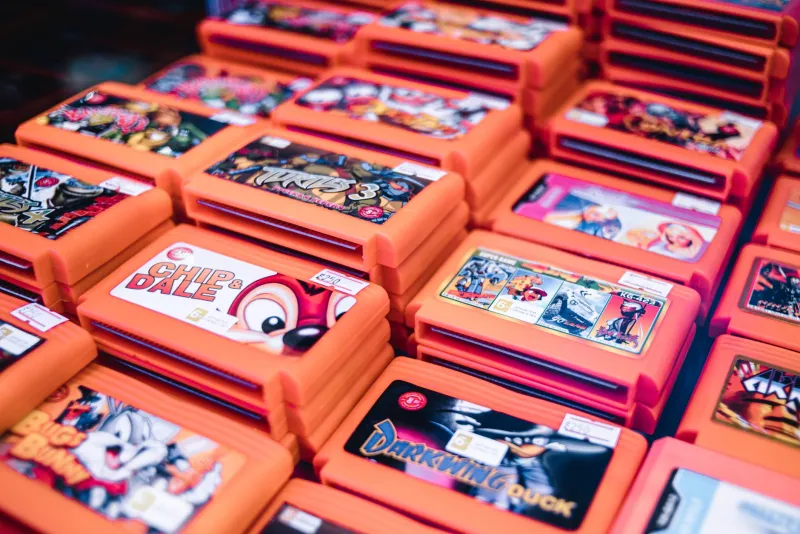
There's a moment every retro game collector talks about. You're in a narrow shop somewhere off Akihabara's main drag, flipping through a wire bin, and your fingers land on something that would go for $80 on eBay — priced at ¥500. It happens. Not every day, and not as often as it used to, but it happens. And when it does, it's the kind of thing that makes you book a return trip before you've even left Japan.
For American collectors, Akihabara represents something close to a holy site. The density of vintage game inventory here is genuinely unmatched — dozens of shops within walking distance of each other, stocking everything from common Famicom titles to legitimately rare PC Engine CD-ROMs. But walking in blind is a recipe for overspending, missing the best finds, and occasionally getting fooled by a reproduction cart. This guide is here to change that.
Know the Landscape Before You Walk In
Akihabara's retro game scene isn't concentrated in one building or one block — it's scattered across the neighborhood in a way that rewards exploration but punishes aimlessness. The big, well-known chains (Super Potato, Retro Game Camp, a few others) are great starting points, but their prices reflect their fame. Serious collectors use these stores to benchmark prices, not necessarily to buy.
The better deals tend to live in smaller, independently operated shops on the side streets east and west of Chuo-Dori, and in the upper floors of the multi-level buildings that line the main avenue. Elevator lobbies in Akihabara often have directory boards listing every tenant — get in the habit of reading these. A retro game dealer on the fourth floor of an otherwise unremarkable building can have inventory that blows the street-level chains out of the water.
Worth noting for US visitors: the Japanese retro game market has its own regional quirks. Super Famicom games (Japan's SNES equivalent) are generally abundant and reasonably priced for common titles, but hardware can be surprisingly expensive compared to what you'd find at an American flea market. Famicom Disk System games are a specialty area — prices vary wildly based on condition and rarity, and this is one category where counterfeits occasionally surface.
Spotting Authentic Cartridges
Most of what you'll find in Akihabara's retro shops is completely legitimate, but reproductions do exist, particularly for high-value titles. A few things to check:
The screw type matters. Authentic Famicom and Super Famicom cartridges use specific screw types that most reproduction manufacturers don't bother replicating accurately. If the screws look wrong — too uniform, too shiny, or the wrong head type — take a closer look.
Board inspection is your friend. Many reputable shops will let you open cartridges for inspection if you ask politely. The PCB inside a legitimate cartridge will show appropriate aging, manufacturer markings, and mask ROM chips. Reproductions typically use flash memory chips that look noticeably different.
Labels tell a story. Original labels on well-preserved carts have a specific texture and print quality. Reprinted labels often look slightly too crisp, and the color saturation can be off. Compare against reference photos if you're unsure about a high-value purchase.
Buy from shops with grading systems. Most established Akihabara retro dealers grade their inventory — typically on a scale from junk condition ("junk" is literally the word they use, written in katakana) to near-mint. Graded inventory is less likely to hide surprises.
Navigating Prices and Negotiation
Here's something American shoppers often get wrong: haggling culture in Japanese retail is much more muted than in many other parts of the world. Aggressive price negotiation in a small shop isn't just ineffective — it can be genuinely off-putting and close doors for you. That said, there are legitimate ways to work with pricing.
Buying multiple items from the same shop often opens the door to a polite ask about a combined discount. Phrasing matters — something like "If I take all of these, is there any flexibility?" delivered with a smile and in a low-key way tends to land better than a flat counter-offer. In larger chain stores, prices are essentially fixed. In smaller independent shops, there's occasionally a little room, but don't push it.
For context on fair pricing, the Surugaya website (suruga-ya.jp) is the closest thing Japan has to a standardized price guide for retro games. It's in Japanese, but Google Translate handles it well enough to use as a reference tool. Check a few listings before you shop so you're not flying blind.
Shipping Your Haul Home
This is where a lot of first-time collectors hit snags. Getting game cartridges and hardware back to the US is generally straightforward from a customs perspective — retro video games don't fall into any restricted or prohibited category. The main considerations are practical rather than legal.
Surface mail (SAL or regular surface) is cheap but slow. Japan Post offers several shipping tiers. For heavy hardware like consoles, surface mail can take six to twelve weeks but costs a fraction of air shipping. Plan accordingly.
EMS is the fast option. Japan Post's EMS service is reliable and typically arrives in the US within a week. It's significantly more expensive for heavy packages, but the tracking and speed are worth it for valuable items.
Declare accurately. Don't ask shops to undervalue items on customs forms — beyond the ethical issues, it can create real problems if something gets flagged. Retro games don't attract import duties that make this worth the risk anyway.
Consider shipping directly from the shop. Several Akihabara retailers offer international shipping from the store. For large hauls, this can be more practical than hauling everything back to your hotel and dealing with packaging yourself.
The Mindset That Makes Great Finds
The collectors who consistently score the best stuff in Akihabara share a few habits. They visit multiple times rather than trying to cover everything in one marathon session — inventory turns over, and what wasn't there on Tuesday might show up by Friday. They look in the junk bins seriously, because mislabeled or overlooked items turn up there regularly. And they treat shop staff as potential allies rather than obstacles — a brief, genuine conversation about what you're looking for can occasionally lead to someone pulling something from the back.
Akihabara's retro game market is one of the last great hunting grounds for collectors. It rewards patience, preparation, and a genuine love for the hobby. Come with both, and you'll leave with stories worth telling.