Two Hundred Yen of Pure Chaos: Inside Akihabara's Capsule Toy Obsession
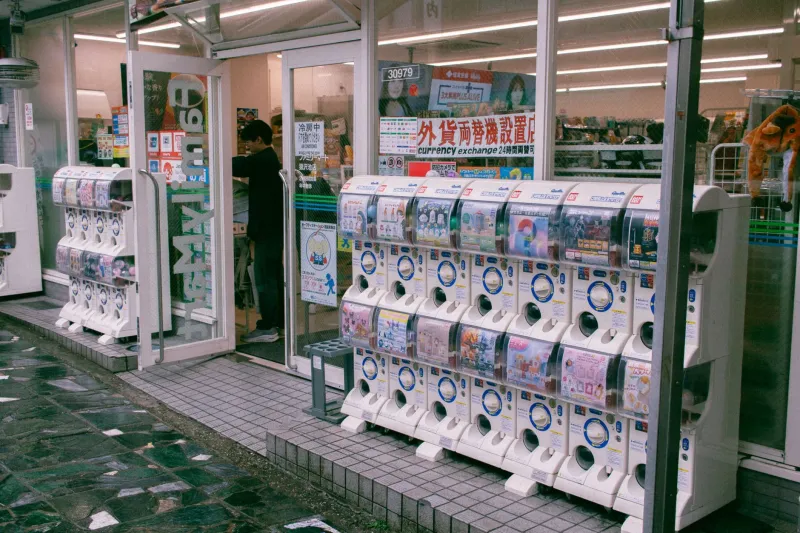
There's a moment every American tourist in Akihabara eventually has. You're walking past a storefront, you spot a machine dispensing tiny ceramic ramen bowls, and you think, eh, 200 yen, why not. Forty minutes and 6,000 yen later, you're standing in Gachapon Kaikan holding a grocery bag full of miniature soda-bottle keychains, wondering what just happened.
Welcome to the capsule economy.
From Vending Gimmick to Full-Blown Industry
Gachapon — named for the gacha-gacha crank sound the machines make — has been around since the 1960s, but Akihabara turned it into something closer to a sport. What used to be a row of machines outside a hobby shop is now dedicated multi-floor emporiums. Gachapon Kaikan near the Chuo-dori main drag packs hundreds of machines into a space the size of a convenience store, and it's rarely less than half full of tourists and locals at any hour.
The genius of the format is the price floor. Two hundred yen is roughly $1.30. It's the rare collectible purchase where the entry cost feels like nothing — which is exactly why the exit cost feels like everything. Capsules typically run 200 to 500 yen now, with premium series pushing 600 or more.
What's Actually Worth Hunting
Not all capsules are created equal. If you're building a haul, these categories consistently punch above their weight:
- Miniature food and everyday objects — Bandai's capsule kitchenware and tiny "waste nothing" series are absurdly detailed and cost pennies at scale
- Anime and game tie-ins — series rotate constantly, so a hall visit can surface figures for franchises you won't find stateside
- Desk toys and fidget-tier stuff — the magnetic, kinetic, weirdly satisfying category that makes great cheap gifts
- Full-set chases — many series run 5–6 figures plus one secret rare; completing a set is half the fun and doubles the resale value if you ever part with it
That last point matters. The secondary market for gachapon is real. Unopened full sets and rare "secret" pulls regularly move on Mercari and Yahoo Auctions for several times retail, and certain vintage capsules from the 80s and 90s trade like mid-tier trading cards. You're not going to fund a trip on capsule flips, but a sealed set of a discontinued series can genuinely be worth $30–80 against $8 of machine money.
Etiquette: The Unwritten Rules
Gachapon halls in Akihabara are orderly, and nobody will scold you, but a few habits will mark you as a considerate visitor:
- Don't camp a machine for 20 straight pulls during peak hours — step aside between cranks if there's a line
- Open capsules at the designated counters or outside; the paper wrappers and empty capsules go in the bins provided, not street trash cans
- Have coins ready. Most machines take 100-yen pieces, and the change machines are usually in the corner — feeding bills into every machine you visit slows everyone down
- Many halls now take IC cards (Suica/Pasmo) or IC payment at newer machines, which is a lifesaver when your coin pouch dies at pull 30
Getting the Haul Home
Here's the part nobody plans for: capsules are bulky for their weight. A bag of 30 figures is mostly air and plastic shells.
First, open everything and ditch the capsules and wrappers before you fly — they're dead weight. Keep the little instruction slips if you care about resale, since sealed-with-paper commands a premium.
Second, use Japan Post. Their EPACK / ePacket light service to the US handles small parcel loads cheaply, and a shoebox of mini figures typically ships for $15–30 depending on weight. If you've gone truly overboard, Yamato Transport's luggage forwarding can ship a box from your hotel to the post office or straight to an international service counter — your hotel front desk can set it up in five minutes.
Third, wrap anything ceramic or fragile in your dirty laundry. It's free padding, and customs officers have seen worse.
The Real Hook
Ask any collector why gachapon sticks when other souvenirs fade, and you'll get the same answer: it's the only souvenir where the memory of buying it is the product. The crank, the clunk, the capsule in your palm, the reveal — you're not paying for a figure, you're paying for 15 seconds of theater. At 200 yen a show, Akihabara is still the best entertainment ticket in Electric Town.