Quarters and Controllers: Why Akihabara's Arcades Are the Greatest Gaming Rooms on Earth
There's a moment that happens to almost every American gamer who walks into Sega's GiGO building in Akihabara for the first time. You step off the elevator onto a floor humming with rhythm game machines — Chunithm, maimai, SOUND VOLTEX — players moving with practiced precision, their scores lighting up screens in cascades of color. Then you take the stairs down and find a row of classic fighting game cabinets, worn smooth by decades of hands, still pulling in serious players who've been grinding combos since the '90s.
The question that hits you isn't how is this still here? It's why did we let ours die?
The Great American Arcade Extinction
To understand why Akihabara's arcade scene feels like a miracle, you have to understand what happened in the US. By the early 2000s, American arcades were essentially dead. The rise of home consoles — particularly the PlayStation 2 and Xbox — made it redundant to pump quarters into a machine when you could play better games at home for free. Chains like Aladdin's Castle and Putt-Putt Fun Centers pivoted to redemption games and birthday party packages. The culture evaporated.
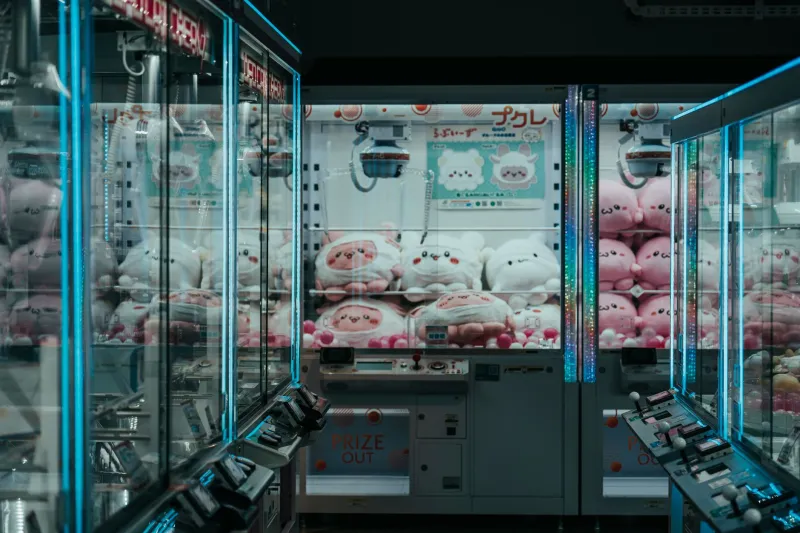
Japan took a different path. Arcades there evolved rather than collapsed. The industry leaned into experiences that couldn't be replicated at home: massive rhythm game setups with specialized controllers, competitive fighting game ecosystems with built-in online matchmaking via cabinet networks, and prize-based crane games (UFO catchers) that became a social ritual. The arcade didn't compete with home gaming — it complemented it.
What You'll Actually Find in Akihabara's Arcades
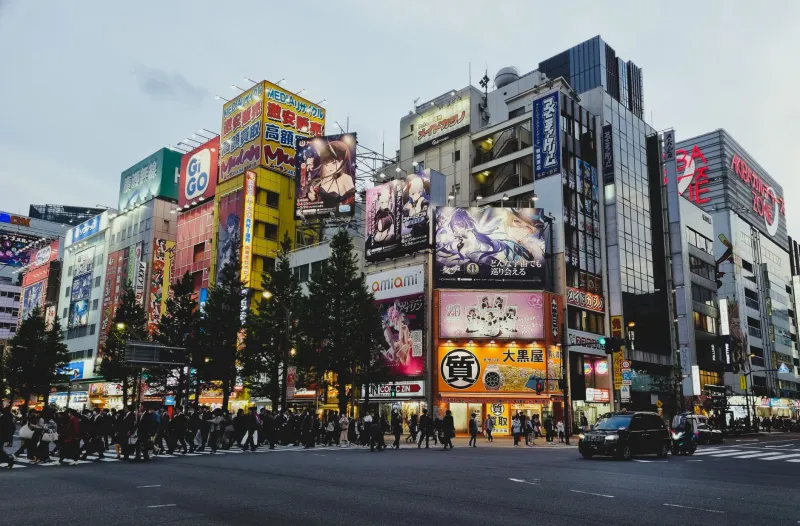
The arcade landscape in Electric Town is dense. Within a few blocks, you've got multiple multi-story venues, each with its own personality.
GiGO Akihabara (formerly Sega Akihabara) is the anchor. Six floors covering everything from crane games loaded with anime merchandise on the lower levels to dedicated rhythm game floors in the middle, with fighting games and retro machines scattered throughout. It's loud, bright, and always busy — even on a Tuesday afternoon.
Hey! is a smaller, more focused venue that's earned a reputation as a serious player's spot. The fighting game community here is no joke. You'll see top-level Tekken, Guilty Gear, and Street Fighter play happening in real time. Watching someone get bodied in Guilty Gear Strive at Hey! is genuinely more entertaining than most esports broadcasts.
Club Sega Akihabara runs a solid mix, with a heavy emphasis on crane games and medal machines alongside a respectable rhythm game selection.
Then there are the smaller, older spots — unnamed or barely-signed venues tucked into upper floors of buildings — where you'll find original CPS2 boards running Dungeons & Dragons: Tower of Doom or a pristine Virtua Fighter 4 cabinet. These places feel like time capsules, and the regulars who haunt them are deeply committed.
We Talked to the Regulars
During a recent visit, we spent some time chatting with players at Hey! through a mix of broken Japanese and enthusiastic gesture-based communication. One regular — a guy in his late 30s who asked to be called Kazu — has been coming to Akihabara arcades since he was a teenager in the mid-'90s.
"The machines are part of it, but it's really about the community," he explained, gesturing around the fighting game floor. "You see the same people. You learn their habits. You improve together." He's been playing Tekken in arcades for over 25 years and has no plans to stop, even though he owns the home console version. "It's different here. The pressure is real."
A staff member at one of the crane game floors — who gave her name as Yuki — offered a different perspective on why the arcade model works in Japan. "People come in groups. It's social. You don't come to an arcade alone here — or if you do, you end up talking to someone anyway."
That social fabric is something American gaming culture largely pushed into online spaces. Japan kept it physical.
The Rhythm Game Phenomenon: A Genre That Built a Culture
If you're not familiar with Japanese rhythm games, prepare to have your mind rearranged. These aren't the Guitar Hero setups you remember from GameStop kiosks. maimai has players swiping and tapping an enormous circular touchscreen to the beat of J-pop, anime songs, and classical remixes. Chunithm uses an air sensor above the keys so players wave their hands through the air at precise moments. SOUND VOLTEX involves a complex controller with knobs and buttons that takes weeks to learn and years to master.
These games are designed exclusively for arcade environments. The hardware is too expensive and too large for home use, and the experience is inherently communal — you watch others play, you get watched, you feel the energy of the room. It's performance as much as gaming.
For US visitors, even watching is a spectacle. Skilled players on maimai or Chunithm move with a fluidity that looks choreographed. It's genuinely impressive.
VR and the Next Chapter
Akihabara's arcades aren't just preserving the past — they're running experiments with the future. VR pods have been integrated into several venues, offering experiences that go beyond what you'd get from a home headset. Location-based VR setups with full-room tracking, haptic feedback vests, and multiplayer configurations give arcades a new reason to exist in the age of the PlayStation 5.
The key insight Japanese arcade operators seem to have grasped — and that most US entertainment venues are still figuring out — is that the future of out-of-home gaming isn't about competing with what people have at home. It's about offering something fundamentally different.
Why This Matters for US Gamers
Visiting Akihabara's arcades isn't just a nostalgia trip. It's a look at what gaming culture could look like when it's given room to breathe and evolve. The US has Dave & Buster's, sure, but that's not the same energy. Not even close.
If you're making the trip to Electric Town, set aside at least a full evening for the arcades. Bring ¥2,000–¥3,000 in coins, approach the rhythm game machines with zero ego, and let yourself get absorbed. It's one of the most uniquely Japanese experiences you can have — and one that no amount of home gaming will ever replicate.